
Building ADA-Compliant Websites – AVTA
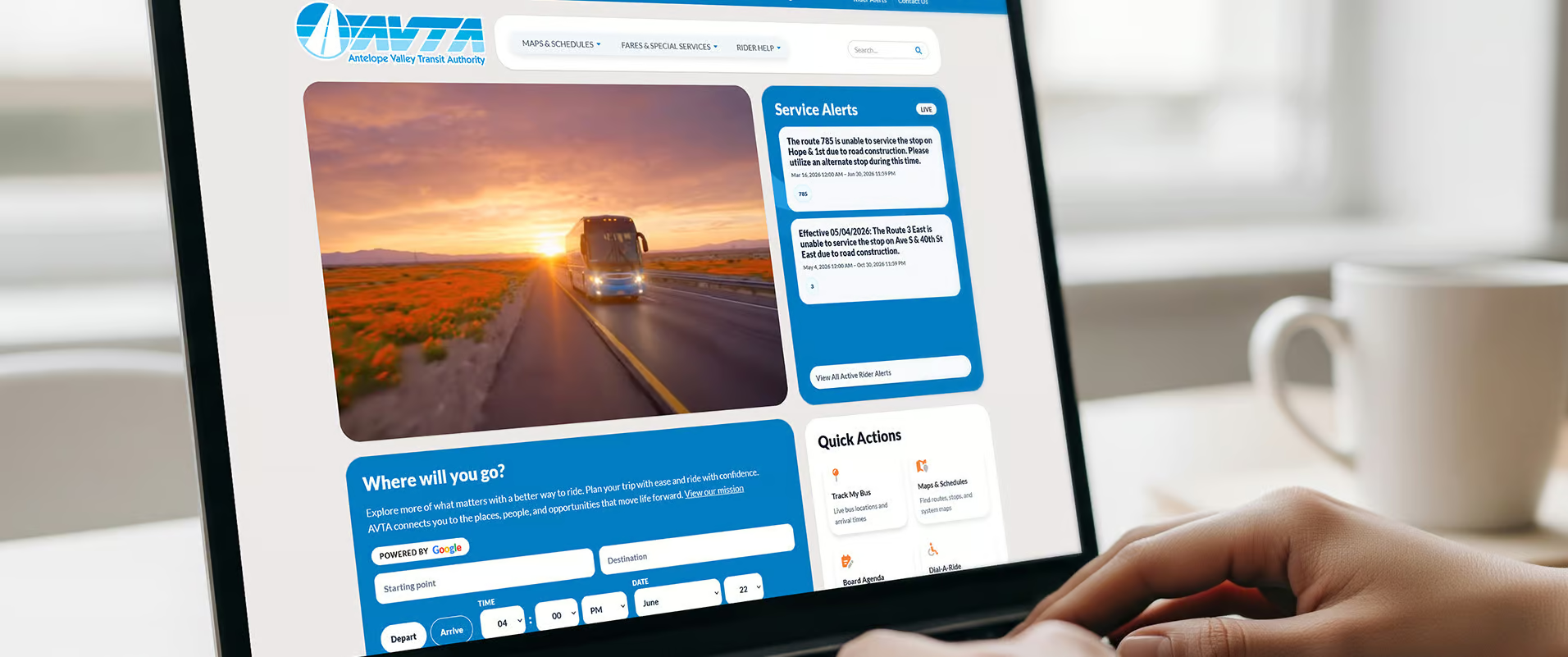

The Problem: Transit Agencies Are a Named Target Under Title II
Your Website Isn’t Just a Nice-to-Have. It’s a Legal Obligation.
If you run a transit authority’s website, you’re not guessing about whether ADA compliance applies to you – the Department of Justice has already answered that question. Transit authorities are explicitly named as a “special district government” under the DOJ’s Title II final rule, which requires all state and local government websites and mobile apps to meet WCAG 2.1 Level AA. The compliance deadlines were recently extended – special districts and smaller public entities now have until April 26, 2027, with larger jurisdictions held to an earlier date – but the DOJ has been clear that the extension does not lower the legal bar, only the enforcement timeline.
That means the agencies that wait are the ones most exposed: to DOJ complaints, to private litigation, and to riders who simply can’t use the services your agency is built to provide. An ADA compliance audit isn’t paperwork. For a transit agency, it’s the first step in making sure every rider – regardless of vision, mobility, or cognitive ability – can find a route, read a schedule, and get where they’re going.
What we do in this phase:
- A full ADA compliance audit combining automated scanning with manual keyboard and screen-reader testing (automated tools alone miss most real-world barriers)
- A prioritized remediation roadmap scoped to your board’s budget and timeline, not a generic punch list
- Documentation your agency can point to if a complaint or demand letter ever arrives
The Work: What We Actually Fixed for AVTA
We didn’t just run a scanner and hand AVTA a PDF. We rebuilt the rider-facing parts of avta.com that mattered most – the tools people actually use to catch a bus.
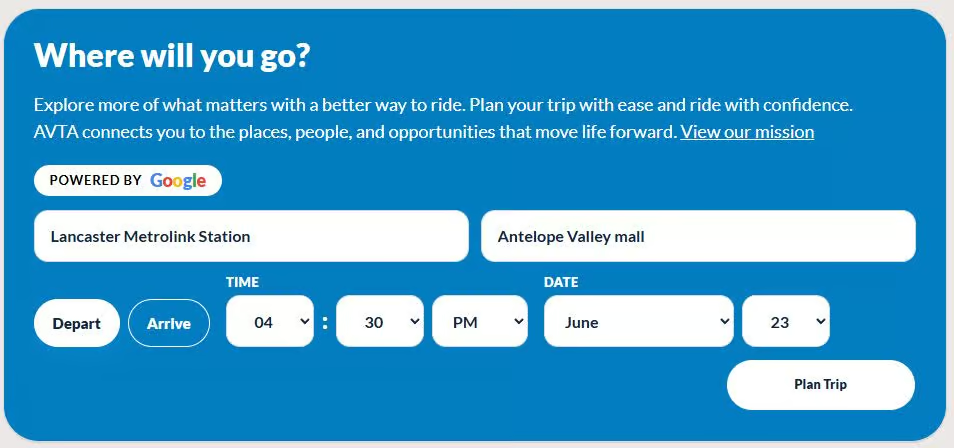
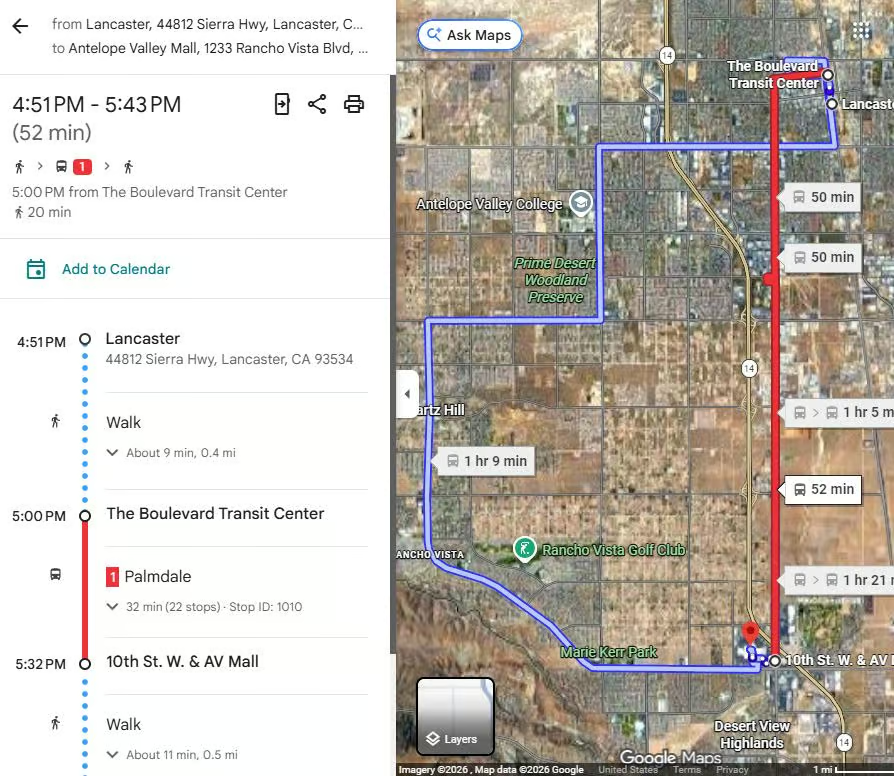
Trip planning that works for every rider. AVTA’s homepage now runs on an accessible, Google-powered trip planner – riders enter a “From” and “To,” pick a time, and get a route, instead of hunting through a PDF table to figure out which bus to take.
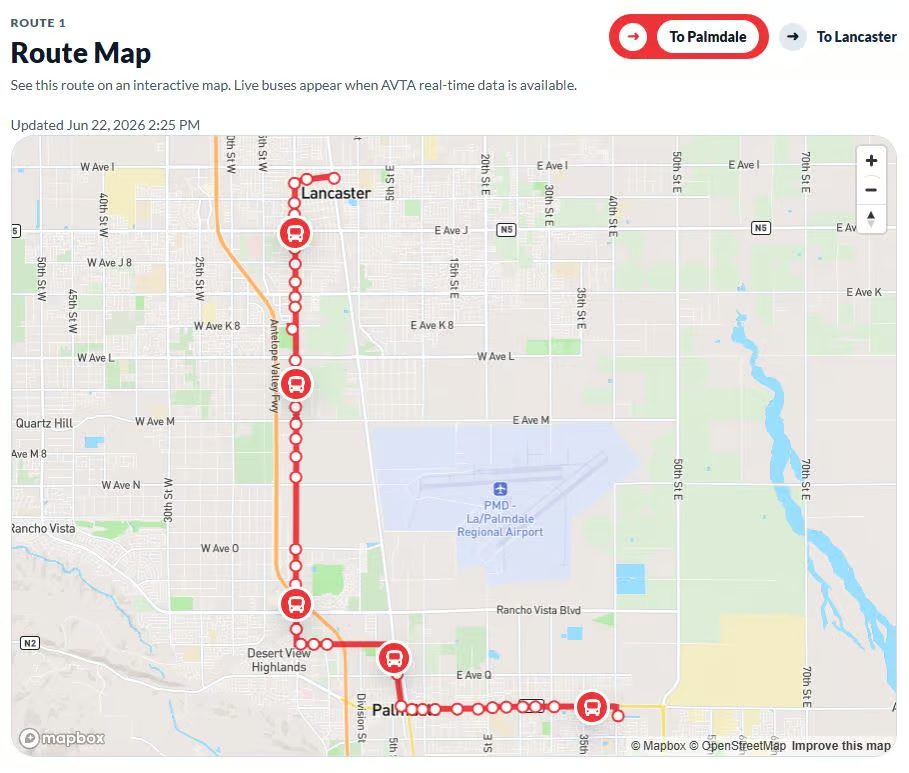
Real-time bus locations, not static timetables. We helped move AVTA away from a system built entirely around downloadable PDF schedules – historically one of the biggest accessibility failure points for transit sites, since PDFs are notoriously difficult for screen readers to parse – toward live, on-screen tools. Riders can now track exactly where a bus is along its route at any given moment through AVTA’s live bus locator, rather than relying on a printed timetable and hoping it’s still accurate.
Structured, navigable route information. Every route on the new site (Routes 1 through 52, commuter lines, supplemental school routes, Dial-A-Ride) is built as a properly structured, keyboard-navigable page – not a flat PDF – so screen reader users can move through schedules and stop information the same way sighted users do.
This is the kind of transformation a transit agency website accessibility audit should lead to: not just passing a checklist, but giving riders with disabilities the same independence at the bus stop that everyone else has.
Why PDFs Are the Single Biggest Accessibility Risk on Transit Sites
“We Have a PDF for That” Is Not an ADA Compliance Strategy
Transit websites are some of the most PDF-dependent sites on the internet – route maps, schedules, fare charts, board agendas. Under WCAG 2.1 AA, a PDF has to meet the same accessibility standard as an HTML page: proper tagging, reading order, alt text, and full screen-reader compatibility. Most legacy transit PDFs meet none of it.
The DOJ’s rule does carve out a narrow exception for preexisting documents not currently used to access services – but a route schedule a rider needs today to catch a bus doesn’t qualify. Active schedules, fare information, and trip-planning content have to be accessible, period.
Our approach for transit agencies:
- Replace static PDF schedules with live, structured HTML route and arrival data wherever possible (what we built for AVTA’s route pages and bus tracker)
- Remediate any PDFs that must remain (board agendas, archival documents, downloadable maps) to meet WCAG 2.1 AA tagging requirements
- Build new content so it never starts as a PDF-only deliverable in the first place
The Ongoing Part:
Compliance Isn't a One-Time Audit
Staying Compliant After Your Site Passes
An ADA compliance audit gives you a snapshot. Every schedule change, every new route page, every board agenda upload is a chance to introduce a new accessibility gap — which is exactly how compliant sites slip out of compliance within months. We work with transit agencies on:
- Editor training so staff publishing service alerts and route changes don’t reintroduce PDF-only or untagged content
- Ongoing monitoring and periodic re-audits tied to your agency’s content calendar, not just a deadline
- Vendor and procurement language that holds third-party tools (trip planners, payment systems, GTFS feed providers) to the same WCAG 2.1 AA standard your own site meets
Ready for an ADA Compliance Audit
Built for Transit Agencies?
We’ve already done this work for a real transit authority — not a demo, not a theoretical case study. If your agency is facing a Title II deadline, a board inquiry, or just knows the current site isn’t serving every rider, let’s talk about what an audit would actually find.
